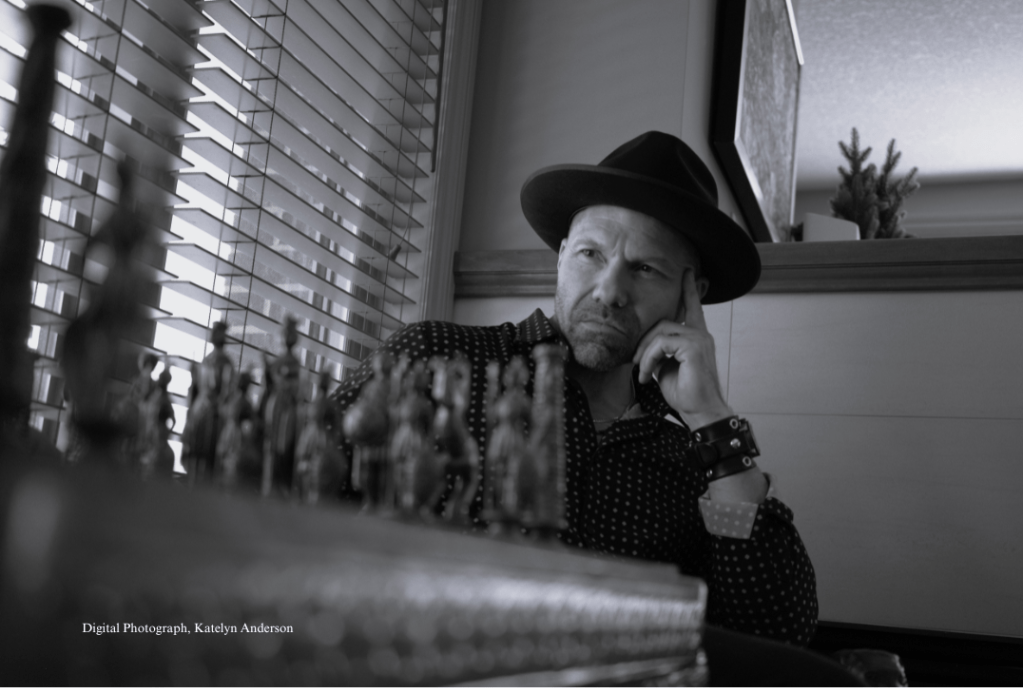
“You need to go away and come back…to understand how good it was where you were…You have to go away. Everybody has to go away. You have to go on that pilgrimage.”
—Eric John, March 22, 2024
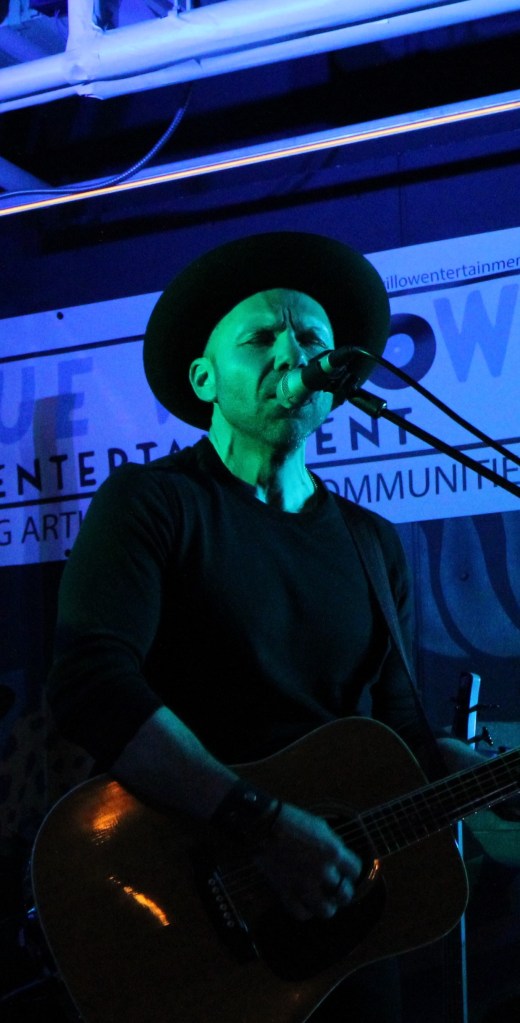
Eric John, of Eric John Music, is a musician and farm-kid from Macklin Saskatchewan who stretched his roots across a corporate career in Calgary and Victoria to plant them again as a full time Indie Singer/Songwriter. He lives and works on a restored turn-of-the-century farm near Carseland, AB and from “The Barn,” the studio he built during the pandemic, he gave life to songs he’d long carried for his debut solo album, We’re All The Same.
The album is eclectic. The songs are doorways to episodes from John’s life, each one distilling distinct periods of experience, experimenting with genre and point of view to process his experience. There is a deep sense that throughout his life, through all the different roles he’s held, as son, as rural, as student, as urban, as band-mate, as employee, as husband, as mentor, as rockabilly, as political subject, as brother, as friend, as creative, as man, he’s made songs to make sense—of politics, of relationships, of grief, of life.
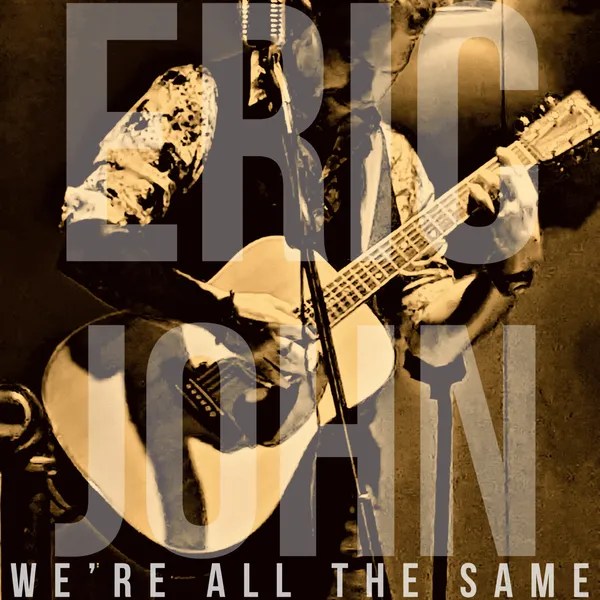
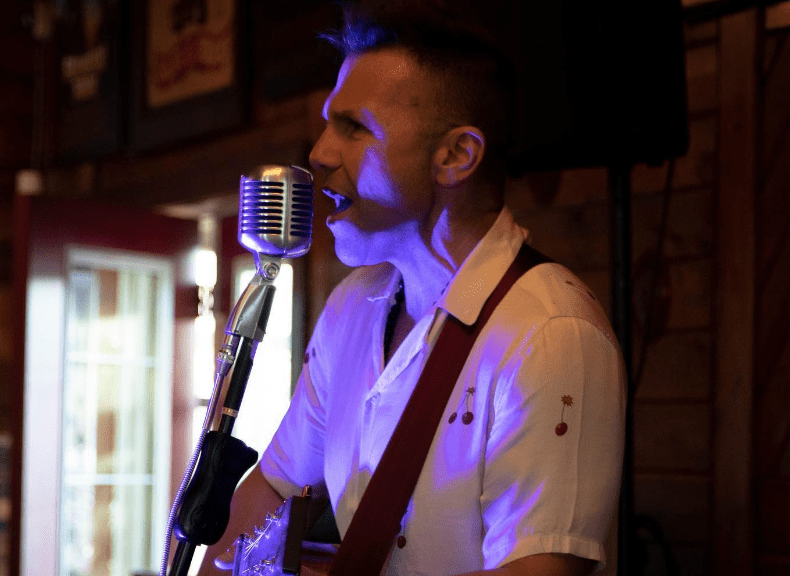
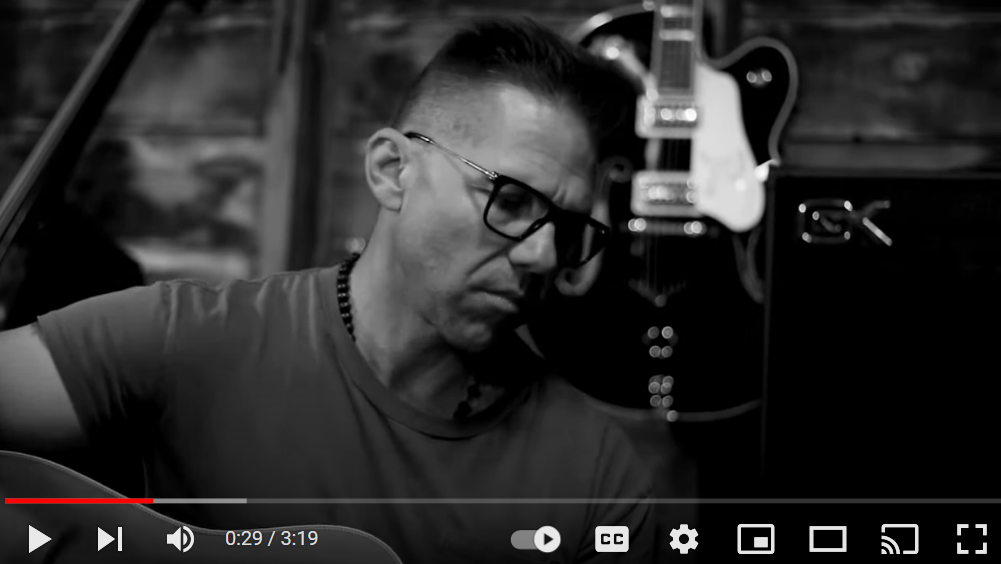

Thematically, the songs reflect “a lot of kind of mental health type….experiences…lifelines in the dark places…” and John’s lens seems to settle outward after the songs are written. They are certainly autobiographical—John is firmly planted in the Romantic tradition of confessing the self as art—but he has a sense of himself as part of a whole, reconciling people, ideas, genres, instruments, and experiences that seem at-odds. He writes to get himself and other people through, and through to each other.
Maybe inherent in that idea of music-as-medicine is that John’s primary site of creative production is rural – he is both grounded and inspired by the countryside. Some of his music references the pastoral imagery of his “Daddy’s Farm,” and reflects the old-time country he listened to and played with his father. The steel guitar and idyllic lyrics lack the melancholy usually married to nostalgia, and his take on rural culture in North America isn’t naïve. He is openly critical of the alt-right conservatism often associated with rural communities, speaking to the impact of isolation on world-view, and deeply troubled by the idea that this demographic has been exploited politically by leaders with questionable intention. His song “Higher Ground,” directly speaks to the polarization he saw in his community during the era of Donald Trump’s Administration: “I think I was trying to convince everybody that they didn’t have to pick one side. There’s truth on both sides of the political spectrum.”
John’s music points to a profound need to mitigate the negative aspects of social and geographical isolation with exposure to diverse ways of being. The Land can ground the human psyche with peace, and it powerfully inspires John’s writing, but he is passionate about balancing that solitude with community. There is a philanthropic aspect to his projects—he’s creating something for himself, but fusing that with collective outcomes.
Blue Willow Entertainment, the management company John started in 2022, provides representation, mentorship, marketing, and recording support to signed artists, with the vision to promote independent music and cultural production as financially viable. John is building more than the second album he’ll record in April 2024. He’s driven to build the type of industry where diverse artists have the support they need to thrive and develop.
John seems as a pilgrim come priest, and present in that metaphor is a reflective longing for significance. He respects his audience, and feels seriously that “to earn their ears,” he’s “got to make sure there’s something, you know, relevant that needs to be said” or that they are “going to get out of it.” His own experience needs to mean-something and this meaning amplifies when it can be useful to someone else.
We’re going to get into this rural stuff. You know, growing up rural, every waking moment needed to be productive…you had to work…it doesn’t matter if you were feeding chickens or cows…you had to be productive…that’s exactly how I feel all the time. I can’t be writing about hanging out at the beach.–Eric John, March 22, 2024
–Eric John, March 22, 2024
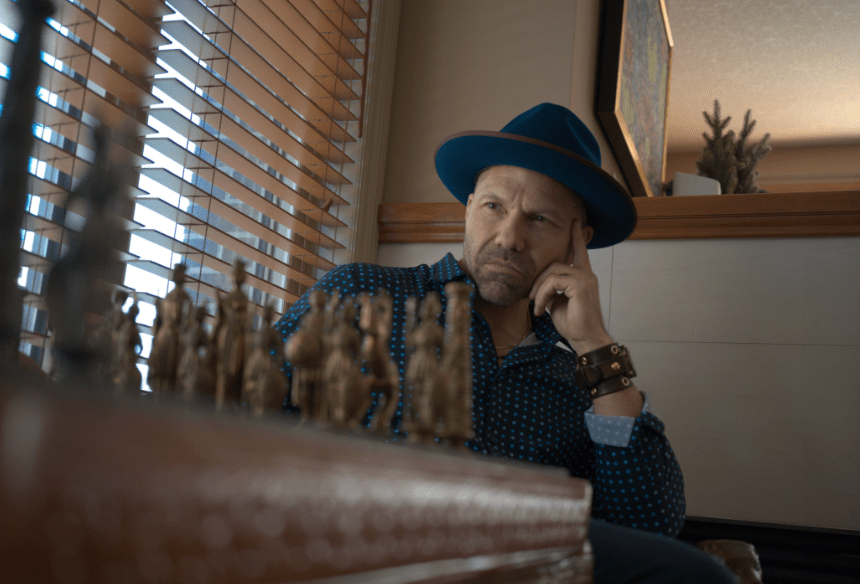
Digital Photograph,
Katelyn Anderson
John connects the need for productivity to survive in remote contexts, and his corporate life, with his approach to writing. John and his songs have to “do” something. Its not enough that they exist. They must have impact. They must roam and scour and think and search and reach along their path to light from dark, and on the album, the ten songs are non-sequential. They read like random pages from a spiritual memoir—ten places, ten stations, ten holy visitations. Ten moods, ten portals, ten specters haunting mortals. Indie, Blues, Americana, Country, Rock and Roll, and Post Grunge take turns singing songs around the campfire at the album’s heart, sacrificing consistency on an altar of respect for how John originally heard the music. It was a conscious editorial decision for him to layer contrasting production elements, themes, genres, and time periods.
As a whole, its disorienting for the listener, but each song tells a coherent story. They mimic the unpredictability of memory, of how we can seem firmly situated in stable times and places until a word, a smell, or a song becomes a vehicle to another world. The self, the sum of all those remembered things, can weave so aptly through that maze of doorways, recognizing patterns in our experience that solidify who we think we are. We make sense of chaos, power, control, joy, depression, euphoria, grief, gain, and loss, until we embody avatars for the selves who’ve died and rose again. Memories and music make us new again. Infinitely.
Like the album’s title, the songs are different, but they’re all the same. They tell the same story—that the longest journey is the one we take through our own bias. Our instinct is to reject difference. Our instinct is to reject ourselves when we’re different than the selves we think we are or should’ve been. Familiarity is the enemy of progress. Inhabit discomfort. Leave. Go away and come back. We have to go on that pilgrimage.
–Aldora Cole, April 7, 2024
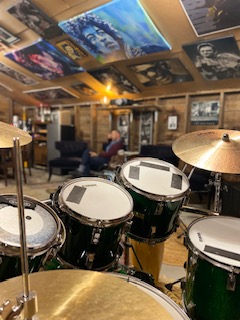
The Barn
Eric John’s studio was built from an antique granary on his rural property near Carseland, AB. It is the home for Blue Willow Studios, a monument to the impact of architecture on cultural production, and a gathering place for the local community.
“It’s how I’ve connected to all my neighbours…the parties have been so good out here.”
–Eric John, on the significance of his studio, 2024
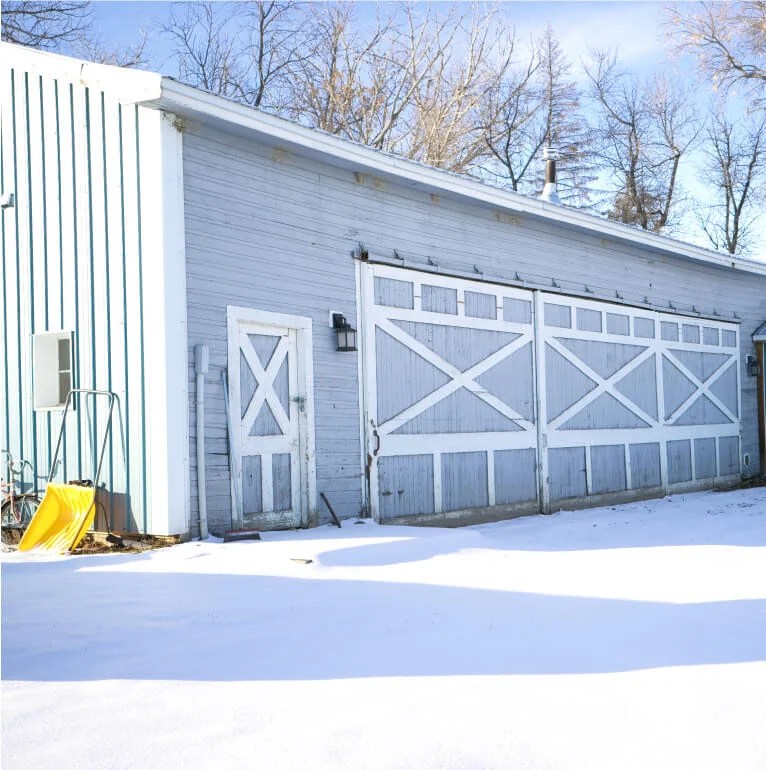
The Exterior
Digital Photograph, Blue Willow Entertainment

Antique Heintzman upright piano, donated to John’s collection by a woman whose family owned it from 1949-2022.
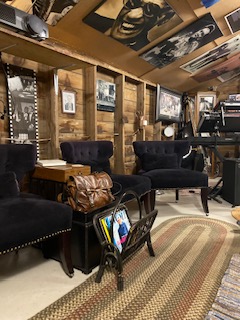

Digital Photograph, Blue Willow Entertainment

 Butterfly Press
Leave a comment